
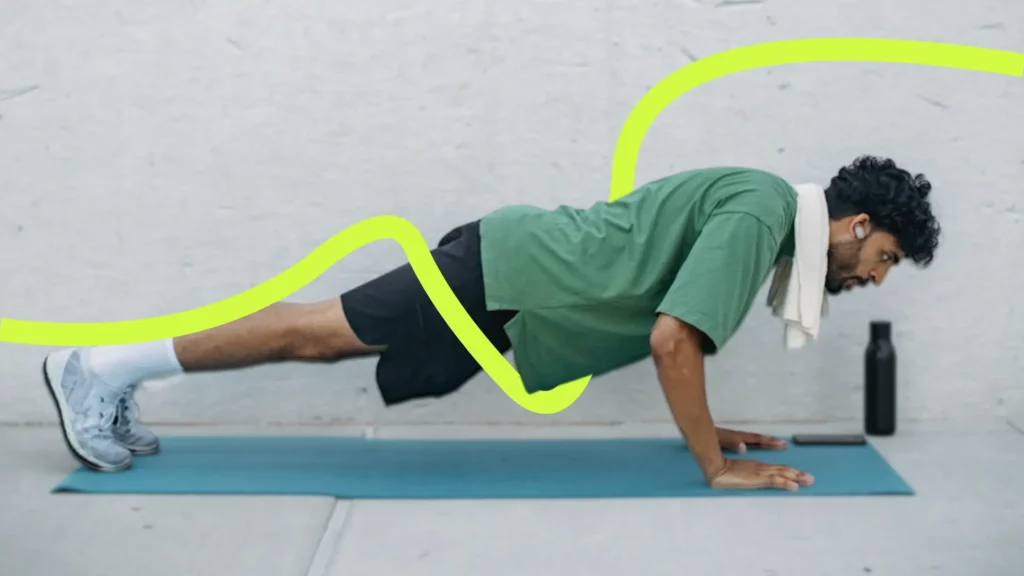
Strength is often seen as the hallmark of fitness. It represents the body’s ability to move efficiently, perform daily tasks with ease, and resist injury. However, the common misconception is that developing strength requires access to a gym, heavy weights, or specialised equipment. In reality, one of the most effective and accessible ways to build strength lies within ourselves: through bodyweight training. This form of exercise not only develops muscular endurance and stability but also teaches control, coordination, and awareness of how our bodies move.
What is Bodyweight Training?
Bodyweight training refers to performing exercises that use one’s own body mass as resistance. Classic movements such as push-ups, squats, lunges, planks, and pull-ups fall into this category. While these exercises appear simple, they can be scaled in intensity by adjusting leverage, tempo, or range of motion. For instance, a person may begin with knee push-ups before progressing to full push-ups or even one-arm push-ups as strength improves. This progressive nature makes bodyweight training suitable for individuals of all levels, from beginners to advanced athletes.
The underlying mechanism behind strength gains in bodyweight training is similar to that of traditional resistance training. Muscles adapt to stress through a process known as progressive overload; gradually increasing the difficulty of an exercise so the body continues to adapt. Each time a muscle is challenged, microscopic tears form in the muscle fibres. As these fibres repair, they grow stronger and more resilient. This physiological response occurs regardless of whether resistance comes from a barbell or from one’s own body weight.
The Importance of Developing Strength
Developing strength through bodyweight training carries benefits that extend far beyond aesthetics. Firstly, it enhances functional strength, the ability to perform everyday movements efficiently. Exercises such as squats and lunges mimic real-world actions like sitting, standing, or climbing stairs, directly improving daily performance. Secondly, bodyweight exercises promote joint stability and injury prevention. Because multiple muscle groups work together in compound movements, stabilising muscles around the joints become stronger, reducing the likelihood of strain or imbalance.
Moreover, strength training is essential for maintaining long-term health. As we age, muscle mass and bone density naturally decline, leading to decreased mobility and independence. Regular strength-based activity counteracts this process by stimulating bone growth and preserving muscle tissue. Studies consistently show that individuals who engage in strength training experience better posture, balance, and metabolic health compared to those who do not. From carrying groceries to preventing falls, being strong in one’s own body is a foundation for lifelong physical independence.
Another often overlooked aspect is the mental and emotional value of strength. Developing control over one’s body fosters a sense of confidence and discipline. Each push-up or plank held a few seconds longer becomes a small victory; proof of growth earned through effort. This intrinsic motivation can enhance overall well-being, reduce stress, and even improve mood through the release of endorphins.
Practical Applications in Everyday Life
One of the greatest strengths of bodyweight training is its convenience. It removes barriers such as time, cost, and equipment. Training can occur anywhere: at home, in the park, or even during a work break. For instance, performing squats and desk push-ups during short breaks helps offset the negative effects of prolonged sitting. Parents can integrate exercise into family time by doing planks while their children play or using a park bench for triceps dips. Travellers can maintain strength on the go with short hotel-room workouts consisting of push-ups, lunges, and planks. These small, consistent efforts accumulate over time to create lasting physical change with endless possibilities of exercises.
Building a Foundation
A balanced bodyweight routine targets major muscle groups through pushing, pulling, and leg-focused movements. Beginners can start with simple exercises such as 10 squats, 10 push-ups (or on knees), 10 lunges per leg, and a 20-second plank, repeated three to four times. As proficiency grows, exercises can be progressed; moving from standard to decline push-ups, or from regular squats to single-leg variations. The goal is not to perform endless repetitions but to maintain control, focus on technique, and gradually increase challenge.
Conclusion
Developing strength through bodyweight training is more than a fitness trend; it is a practical and sustainable approach to lifelong health. It strengthens not only the muscles but also the confidence, discipline, and awareness that come from mastering one’s own body. In a world where convenience often leads to inactivity, bodyweight training serves as a reminder that the most powerful equipment we possess is ourselves.
By embracing movements that require nothing more than space, time, and intention, anyone can build a stronger, more capable body, one that supports every aspect of daily living. Strength, after all, is not defined by how much we can lift, but by how well we can move through life.
