
Physiotherapy
- Treated Over 900 Clients
- We get you stronger after recovery
- Grounded in evidence-based methods
Physiotherapy Treatment
Physiotherapy aims to bring pain relief and movement restoration to individuals who are suffering from pain or recovering from a surgery or injury. Timely treatment has been shown to help prevent condition deterioration and help lower the risk of further injury. There is a focus on imparting awareness and education to the public as to when and whom they should seek treatment for their condition. In addition, we will strongly advocate exercise as a means to treat and maintain healthy bodies.
Conditions We Treat
From boardroom posture problems to race-day injuries — our physiotherapists treat the full spectrum of musculoskeletal conditions, getting you back to what matters faster.
Neck (Cervical Spine)
Common in desk workers, cyclists, overhead athletes & Hyrox competitors
General cervical muscle tightness and restricted movement often linked to sustained postures at a desk or workstation.
Nerve root compression causing pain, tingling, or numbness radiating into the arm — often from prolonged screen time or poor ergonomics.
Headaches originating from the neck joints and muscles, frequently mistaken for migraines. Very common in professionals with high screen time.
Overuse injury from sustained forward head posture during mobile device use — increasingly prevalent among young professionals.
Cervical strain following sudden acceleration-deceleration trauma (e.g. road accident), causing pain, stiffness and reduced range of motion.
Prolapse or bulge of a cervical disc that may compress nearby nerves, causing arm symptoms alongside neck pain.
Compression of nerves or vessels between the collarbone and first rib, causing arm numbness and weakness — seen in swimmers, cyclists and paddlers.
Jaw (Temporomandibular Joint)
Common in high-stress professionals, teeth grinders & contact sport athletes
Muscle soreness and joint strain from nocturnal or stress-related teeth grinding — common among working professionals and endurance athletes.
Residual joint and muscular pain following lengthy dental appointments or orthodontic treatment.
Shoulder
Very common in swimmers, Hyrox competitors, racket sport players, cyclists & desk workers
Partial or full tear of one or more rotator cuff tendons — a hallmark injury in overhead athletes (tennis, padel, pickleball, swimming) and heavy lifting in Hyrox.
Compression of soft tissues under the acromion during arm elevation, causing pain with overhead activities and disturbed sleep.
Injury to the acromioclavicular joint, typically from a fall onto the shoulder — seen in cyclists, trail runners and contact sports.
Recurrent or first-time shoulder dislocation, or the feeling that the shoulder may ‘give way’ — common in racket sports, swimming and Hyrox.
Degeneration or irritation of the long head of biceps tendon, causing anterior shoulder pain with lifting, pulling and overhead activities.
Tear of the superior labrum at the shoulder, often from repetitive overhead loading or a fall — common in paddlers, swimmers and CrossFit / Hyrox athletes.
Inflammation of the subacromial bursa causing localised pain and swelling, often accompanying impingement or overuse.
Elbow
Common in tennis, padel, pickleball, golf & office workers
Overuse tendinopathy of the wrist extensor tendons at the lateral epicondyle. Despite the name, very common in office workers who type or use a mouse extensively.
Tendinopathy of the wrist flexor tendons at the medial epicondyle. Common in golfers, padel and racket sports, and manual-heavy roles.
Swelling of the bursa at the tip of the elbow, often from direct trauma or repetitive leaning — occasionally seen in cyclists from handlebar positioning.
Wrist & Hand
Prevalent in desk workers, cyclists, golfers, padel & pickleball players
Painful catching or locking of a finger during bending, linked to repetitive gripping in sports (cycling, rowing, golf) and keyboard-heavy work
Upper & Mid Back (Thoracic Spine)
Strongly associated with desk work, cycling posture & overhead sports
Joint-mediated mid-back pain that is often sharp on rotation or extension — commonly aggravated by golf, tennis and prolonged sitting.
Lower Back (Lumbar Spine)
The #1 reason people seek physiotherapy — affects desk workers, runners, cyclists & lifters
The most common musculoskeletal complaint globally — diffuse lumbar pain without a clear structural cause, strongly linked to sedentary working patterns.
Prolapse of a lumbar disc that may compress the sciatic nerve, causing buttock and leg pain (sciatica). Common in those who sit for long hours or lift incorrectly.
Radiating pain, tingling or numbness down one leg along the sciatic nerve distribution — often the result of disc herniation or piriformis syndrome.
Age-related degeneration of the lumbar joints causing stiffness and pain, particularly on extension — managed well with physiotherapy and exercise.
Forward slippage of one vertebra over another, causing low back and leg pain — seen in golfers, gymnasts and high-impact sport athletes.
Narrowing of the spinal canal causing back and leg pain with walking — symptoms relieved by sitting or bending forward.
Pain at the base of the spine and into the buttock from SI joint irritation — common in runners, cyclists and those returning to training after a break.
Fatigue fracture of the lumbar pars interarticularis from repetitive lumbar extension loading — classic in runners, triathletes and golfers.
Hip & Pelvis
Key area for runners, triathletes, Hyrox athletes & cyclists
Overuse of the hip flexor complex causing anterior hip and groin pain — classic in runners, cyclists and those doing repeated burpees or sled pulls.
Lateral hip pain on the bony prominence, worse with stairs, lying on the side and after periods of sitting — common in runners and desk workers.
Bony overgrowth causing hip joint pinching and deep groin pain during hip flexion — seen in cyclists, golfers and those who do a lot of squatting.
Tear of the cartilaginous ring of the hip joint, causing clicking, locking or deep groin pain — often associated with FAI in active individuals.
Inner thigh muscle or tendon injury from sudden directional change — common in padel, pickleball, football and trail running.
Degenerative joint disease causing groin pain, stiffness and reduced range of motion — physiotherapy is a first-line treatment to preserve mobility and delay surgical intervention.
Irritation of the piriformis muscle causing deep buttock pain and sciatic-like leg symptoms — common in cyclists, runners and those with prolonged sitting habits.
Knee
One of the most injury-prone joints — critical for runners, Hyrox, hiking & racket sports
Anterior knee pain from poor patellar tracking, extremely common in runners, cyclists, hikers and those doing large volumes of stairs or squats.
Lateral knee pain from iliotibial band friction — the hallmark overuse injury of distance runners, cyclists and Hyrox competitors.
Overuse injury of the patellar tendon below the kneecap, causing pain with jumping, loading and squatting — classic in Hyrox, basketball and trail running.
Anterior cruciate ligament injury from pivoting or landing — common in racket sports (padel, pickleball, tennis) and hiking on uneven terrain.
Cartilage tear causing knee pain, swelling and locking — often from pivoting or twisting in racket sports, or cumulative load in long-distance running.
Medial or lateral collateral ligament sprain from a valgus/varus knee force — common in contact sports, trail running falls and padel lunge movements.
Degenerative joint disease causing pain, stiffness and swelling — physiotherapy is evidence-based first-line management to reduce pain and delay joint replacement.
Inflammation of the bursa on the inner shin just below the knee — common in overweight individuals, cyclists and swimmers doing breaststroke.
Structured physiotherapy following ACL reconstruction, knee replacement, meniscus repair or other knee surgery to restore strength, function and return to sport.
Ankle & Foot
High incidence in runners, trail hikers, triathletes & court sport athletes
The most common sports injury in the world — stretching or tearing of the lateral ankle ligaments from inversion trauma, seen in court sports, trail running and hiking.
Recurrent giving-way of the ankle following one or more sprains, requiring targeted neuromuscular and strength rehabilitation.
Overuse degeneration of the Achilles tendon causing pain and stiffness — a hallmark running and triathlon injury, also common during ‘return to activity’ phases.
Complete or partial tear of the Achilles — can occur during explosive push-off in racket sports or sprinting events. Requires urgent management and structured rehab.
Heel and arch pain from overloading of the plantar fascia — extremely common in runners, hikers and professionals who stand for long periods on hard floors.
Outer ankle tendon pain from repetitive eversion loading — common in runners who train on cambered roads and in trail athletes.
Dysfunction of the main arch-supporting tendon, causing medial ankle pain and progressive arch collapse — managed with physiotherapy and orthotics.
Diffuse inner shin pain from overloading the tibia — the classic ‘too much too soon’ running injury, also seen in Hyrox and military/boot camp-style training.
Fatigue fracture from repetitive loading without adequate recovery — common in high-mileage runners, triathletes and military individuals in Singapore.
Thickening of tissue around a nerve between the toes, causing sharp forefoot pain and tingling — aggravated by tight footwear and repetitive forefoot loading in running.
Benefits of Physiotherapy
Prevent Or Manage Pain
Physiotherapy can prevent and reduce pain with conservative treatment. The pain relief could be achieved without the side-effects of medication.
Conservative Approach
This approach is a non-invasive and carries less risk than a surgical procedure. In the long run, this approach could be more economical.
Safe & Effective Treatment
In many cases, physiotherapy is considered extremely effective. Research suggests that physiotherapy significantly improves the rehabilitation and recovery of most conditions, as well as being instrumental in the prevention of further injury.
What To Expect
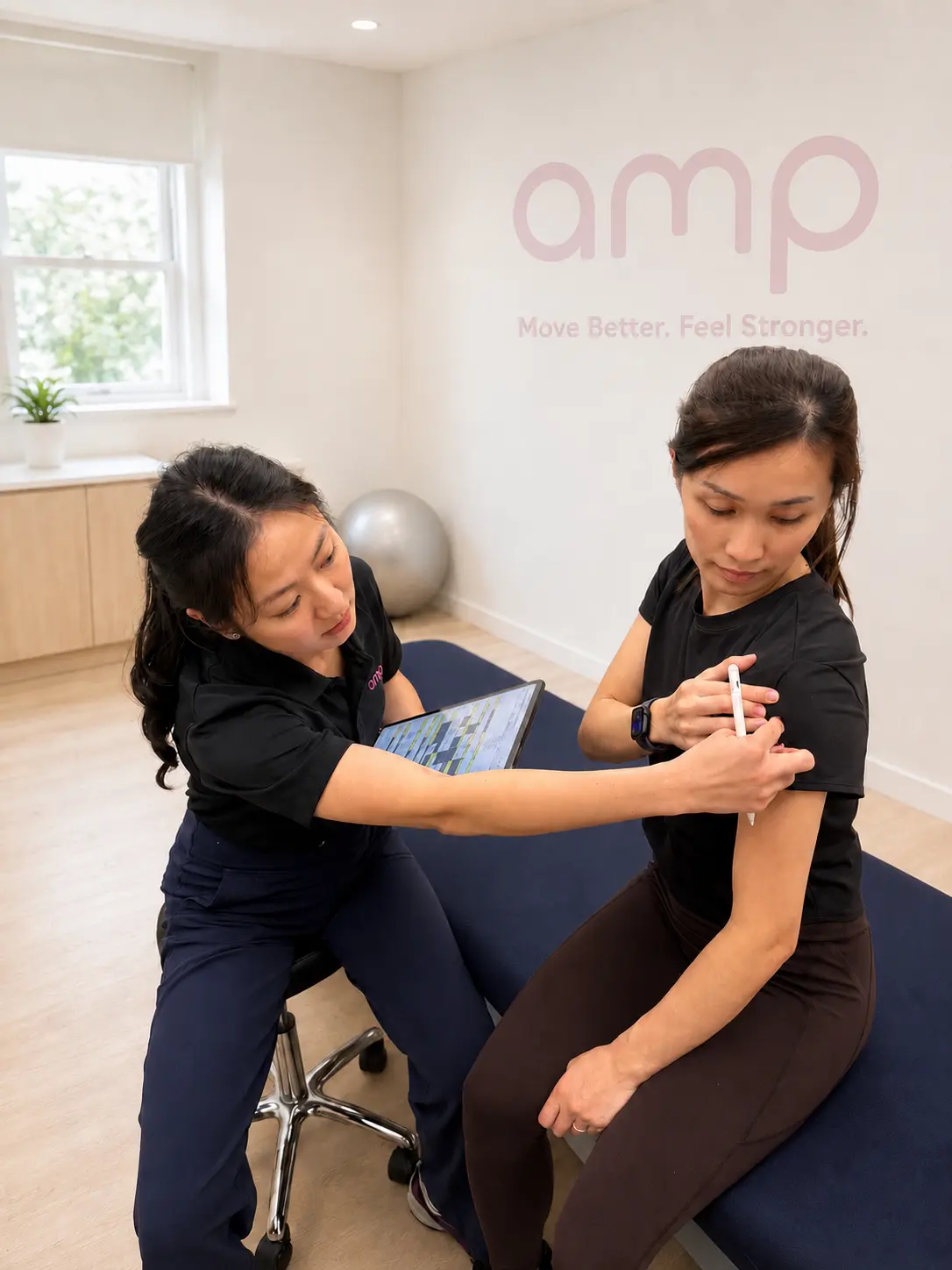
1. Needs Analysis and Health Assessment
We begin by conducting health tests and physical assessments to accurately determine your current state and various health parameters. We will also analyse your movement patterns and exercise techniques to uncover factors that may affect your injury. The test results will help us to identify your needs and customise your recovery programme.
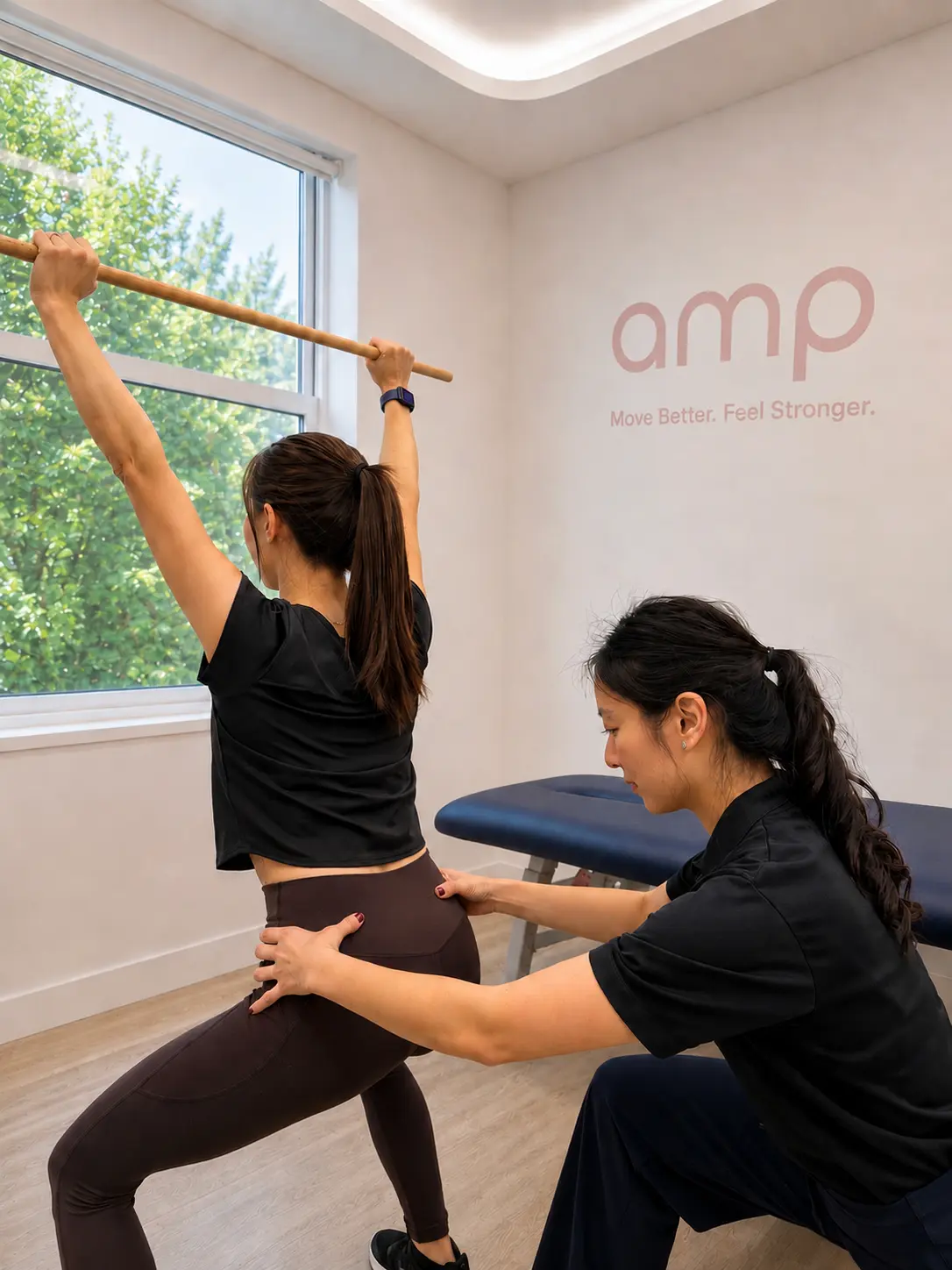
2. Programme Design & Execution
The programme design follows a set of design principles that are evidence-based. This ensures effectiveness and sustainability. Some examples of the design principles are your individuality such as your health history and baseline. Each recovery programme goes through the same structured design process, regardless of injury or condition. After we have confirmed on the specifics of the programme design, your recovery programme can commence! Each session will be conducted under the close guidance of our experience physiotherapist.
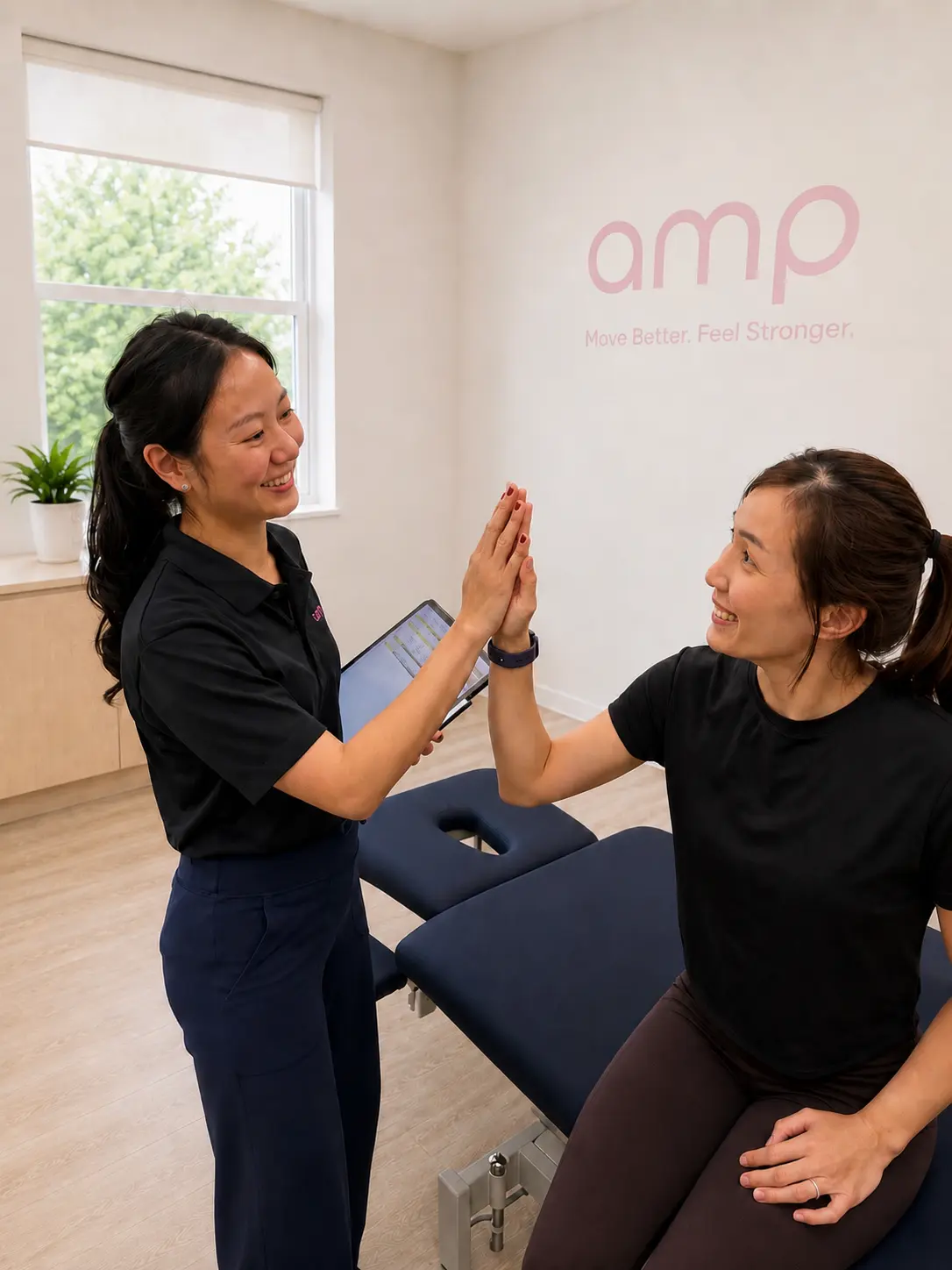
3. Mid and Post-Programme Review
We will conduct regular assessments and reviews to determine the programme progress and outcome. These analyses and examinations are critical as they gives us data to help us to understand if we need to refine the programme to increase effectiveness or to continue with the present design. This objective assessments saves us time and resources by confirming the effectiveness of the programme with numbers.
What Clients Say About Us
EXCELLENTTrustindex verifies that the original source of the review is Google. Cherie is an exceptional professional. Her kindness, empathy, and extensive knowledge made me feel at ease throughout my recovery journey. Her tailored exercise plans and dedication significantly accelerated my progress. I highly recommend her for outstanding care and expertise.Posted on GoogleTrustindex verifies that the original source of the review is Google. I came to see Cherie off the back of a weird pain I had in my right hand. I was seeing a previous physio for this and had completed 5 sessions with them but the pain was no different. I was really worried and concerned about what exactly was causing my pain and so went to see Cherie off a friends recommendation. After 2 sessions with Cherie the pain was 90% better and we have found the root cause of the issue… My appendicitis operation. It’s crazy how that has been linked to pain in my hands but I give Cherie a lot of credit for being able to work this out. She’s great at looking at the body in a holistic way. I can’t recommend her enough. Thanks Cherie!Posted on GoogleTrustindex verifies that the original source of the review is Google. I was recommended to Cherie by a friend, and I’m so glad I took his advice—clinic being located in CBD was a bonus. All my sessions with her have been fantastic. She approaches treatment with a high level of professionalism and expertise, taking the time to understand my concerns and tailor a personalised recovery plan. Her use of techniques like dry needling was especially effective and made a noticeable difference in my progress. From start to finish, she genuinely prioritises my well-being. Highly recommended to anyone looking for physiotherapy and sports injury treatment! A special shoutout to Sylvia as well—she handled all administrative matters well! Making the entire experience smooth and stress-free 🙂Posted on GoogleTrustindex verifies that the original source of the review is Google. Highly recommend AMP Lab for sports injuries and pain management. Cherie’s treatment takes a systematic approach instead of just going for pain points, pain is thus relieved more thoroughly while nearby muscles/ligaments strengthen for support. Thank you Cherie and Sylvia for your excellent work!⭐️⭐️⭐️⭐️⭐️💛Posted on GoogleTrustindex verifies that the original source of the review is Google. Sessions are soothing, informative and even fun! Cherie is excellent in explaining the complexity of conditions, adjustments and how everyday moments affects our physiological health. She makes you feel at ease and all appointments are swiftly handled by her assistant who is very efficient and friendly. Highly recommend booking a session knowing you’ll be in good hands (literally).Posted on GoogleTrustindex verifies that the original source of the review is Google. I had an amazing experience with Cherie (and Sylvia!) for a prior ankle sprain. After just three sessions, I felt completely rejuvenated—lighter, more mobile, and with much less tension throughout my lower body. Cherie is incredibly professional and thorough; she doesn’t just focus on the injured spot, but takes a whole-body approach to healing and well-being. You can really tell she cares about her patients. 💙💙 Sylvia is also super sweet and helpful—she made all the admin stuff smooth and easy, and always ensured I was well taken care of. 🫡💙 Highly recommend this place if you're in need of any physio support!Posted on GoogleTrustindex verifies that the original source of the review is Google. I was referred to Cherie after breaking my arm. Every session was leaps and bounds for my progress in regaining mobility. Her ability to assess my needs with care was impeccable, I love her personality and I look forward to every session as though it's a catchup with a friend!Posted on GoogleTrustindex verifies that the original source of the review is Google. Cherie has been a very helpful and integral part of my recovery journey. She’s discovered in-balances in my body that I never knew were there and have always provided the solution to fix themPosted on GoogleTrustindex verifies that the original source of the review is Google. I’ve been working with Cherie for about six months now, and she is a true professional—dedicated to helping you alleviate pain and stay injury-free. Her methods are effective, and you can feel the results within the session itself. Highly recommend!Posted on GoogleTrustindex verifies that the original source of the review is Google. Very effective in treating the condition and suggesting long term solutions. Highly recommended!
Need Physio Help?
Prefer to message first before booking?
We’re here to help and answer any question you might have. We look forward to hearing from you.
"*" indicates required fields
